
What to Expect During Your First Play Therapy Session
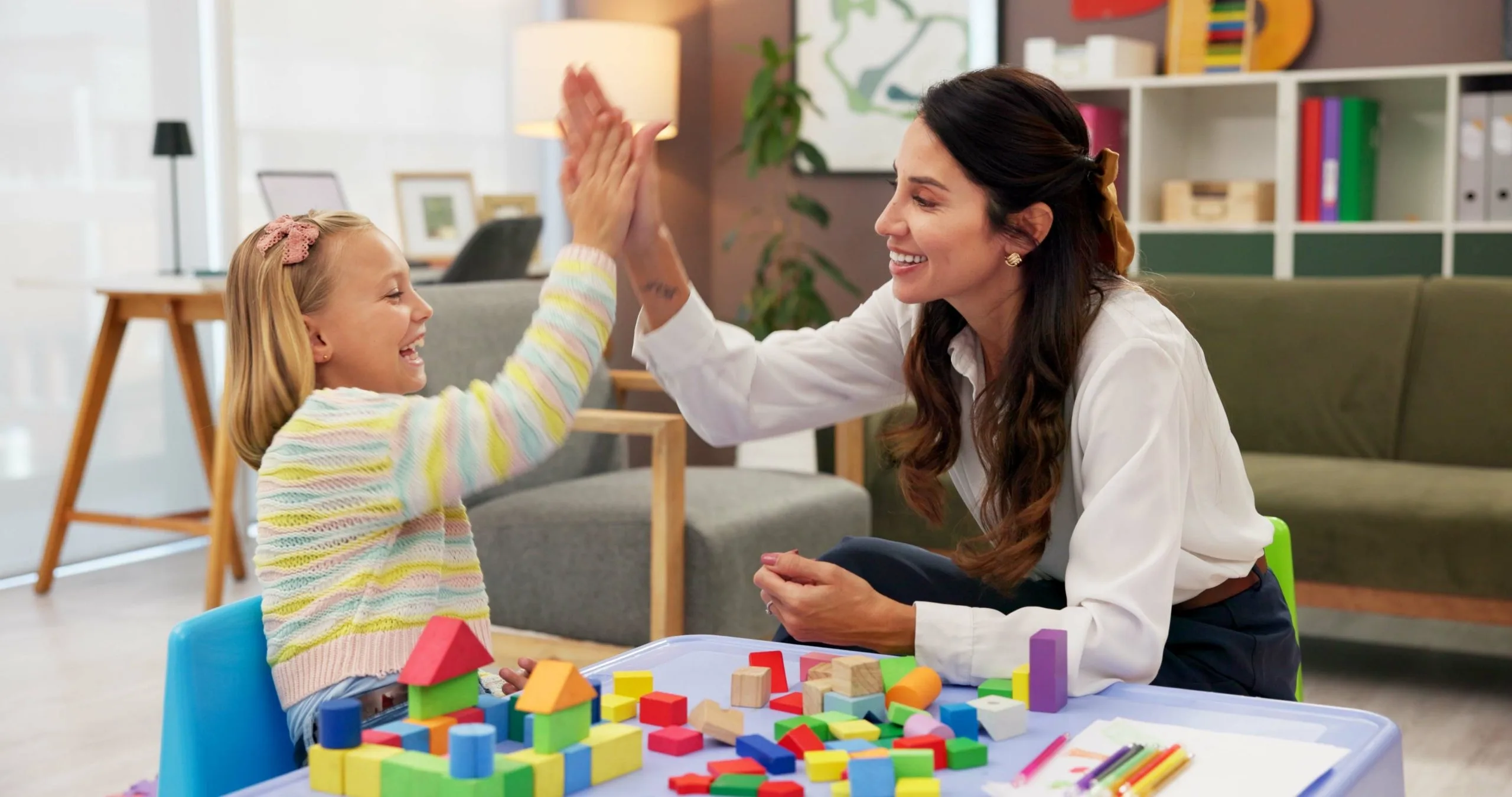
Your child’s first play therapy session is a calm, low-pressure visit where the therapist gets to know your child through play. There are no tests to pass and no hard questions to answer. Your child explores toys and activities, the therapist watches and joins in, and the session ends with a simple wrap-up and a check-in with you. This guide explains what to expect during your first play therapy session so you and your child can walk in feeling ready.
At Vibrant Life Therapy, we offer Play Therapy ages 5 to 13. Play is a child’s natural language. It gives young people a safe way to show feelings they may not have words for yet, work through hard experiences and build healthier ways to cope.
Preparing for the First Session
How to Prepare Your Child for Play Therapy
Children do well when they know roughly what is coming. A few days before the visit, mention it during a calm moment, such as a car ride or bedtime. Keep it short and positive.
Try to plan the day so the visit is not squeezed between other big events. A child who is hungry, tired or rushed may have a harder time settling in. A snack beforehand and some buffer time can help.
Your own mood matters too. Children read the adults around them. Feeling nervous as a parent is normal. A few slow breaths before you leave the house can help you both arrive calmer.
Talking to Your Child About Therapy
Use simple, honest words. You might say: “You’re going to meet someone whose job is to play with kids and help with feelings. There will be toys and art supplies, and you get to choose what to do.”
Avoid framing therapy as a punishment. A phrase such as “You’re going because you’ve been bad” can leave a child feeling ashamed. Connect the visit to something your child already understands: “Things have felt hard since the move. This is a place that helps kids with big feelings.”
Answer questions as they come up. If you do not know an answer, it is fine to say, “Let’s ask the therapist together.” That response shows your child that questions are welcome.
Some children are excited. Others feel shy or resistant. Both reactions are normal, and neither predicts how therapy will go.
What to Bring and Expect Logistically
Our team walks each family through scheduling and paperwork directly once you reach out. That way, the day of the visit can focus on your child rather than on details.
Plan to arrive a few minutes early so no one feels hurried. Dress your child in comfortable clothes that can handle a little paint or play dough. Children relax faster when they are not worried about getting messy.
It also helps to think ahead about what you want the therapist to know. Jot down the changes you have noticed at home or school, when they started and anything that seems to set them off. These notes make your conversation with the therapist easier.
Arriving at the Therapy Clinic
Meeting the Play Therapist
When you arrive at our Minneapolis office or our Maplewood office, your child’s therapist will come out to greet you. Many play therapists kneel or sit at a child’s eye level for this first hello. It is a small gesture that tells a child, “You matter here.”
The therapist will introduce themselves by name and explain, in kid-friendly words, that they will spend time together in the playroom. Some children walk right in. Others want a parent nearby at first. The therapist follows your child’s pace. There is no rush to separate if your child is not ready.
Creating a Safe and Welcoming Space
Feeling safe comes before any healing work can begin. Our care is inclusive, trauma informed and anti-oppressive. We serve families of all backgrounds, with a focus on BIPOC, LGBTQIA+ and gender diverse communities. Every family structure is welcome here.
Our team speaks English, Spanish, Hmong and Somali. For many families, being understood in the language spoken at home makes the first visit feel far less intimidating.
The play space itself is set up so your child can choose. Toys, art supplies and activities are within reach. Children are not told what to play with. That freedom helps them feel a sense of control, which is especially important for children who have been through stress, change or grief and loss.
The Structure of the First Play Therapy Session
Building Rapport and Initial Observations
The main goal of the first session is trust. A child needs to feel comfortable with the therapist before deeper work can happen. Much of the first visit is about building that connection.
While your child plays, the therapist is quietly paying attention. They notice which toys your child chooses, how your child moves around the room and how they handle frustration or new situations. They also notice how your child relates to an adult who is warm, patient and not giving instructions.
These early observations are not judgments. They are a starting point. Over time, they help the therapist understand what your child is carrying and how to help.
Introducing the Play Therapy Process
Early in the session, the therapist usually explains how the playroom works in simple terms. They may say something such as, “In here, you can play with the toys in lots of different ways.”
The therapist will also share a few safety limits. These often include not hurting yourself, not hurting the therapist and not breaking things on purpose. Limits are stated gently and clearly. They help a child feel secure, because the child knows the adult will keep everyone safe.
Beyond those limits, the child leads. This is one of the biggest differences between play therapy and other kinds of support. Your child is not asked to sit still and explain their feelings. They show them through play, at their own speed.
Typical Activities in the First Session
Every first session looks a little different, because every child is different. Common activities may include:
Drawing, painting or working with clay
Building with blocks or other construction toys
Pretend play with dolls, figures or puppets
Simple games that invite back-and-forth play
Quiet, calming activities for children who need time to settle
Some children dive into one activity and stay with it the whole time. Others move quickly from toy to toy. Both patterns are fine. The therapist does not expect a “big moment” in the first visit. A child who simply plays and leaves feeling relaxed has had a successful first session.
Observing and Engaging With Your Child
Play therapists engage in a specific way. Rather than directing the play, they often describe what they see. A therapist might say, “You’re stacking those really high,” or “That puppet looks like it’s feeling angry.”
This kind of reflection tells a child that someone is truly paying attention. It also helps children start to name feelings. A child who cannot yet say “I feel scared” may show fear through a story about a lost animal. The therapist meets them inside that story.
If your child invites the therapist to join a game, the therapist will usually accept. They let your child set the rules. Being in charge for a while can feel freeing for a child who often feels powerless.
Closing the Session
Wrapping Up and the Closing Ritual
Endings can be hard for children, so play therapists usually make them predictable. Your child will likely get a heads-up a few minutes before the session ends. A short warning helps a child shift gears without feeling cut off in the middle of play.
Many therapists use a simple closing routine. This might be a goodbye phrase, a short cleanup together or a reminder that the playroom will be there next time. Repeating the same routine each week builds a sense of safety. Your child learns that sessions have a clear beginning, middle and end.
If your child is upset about leaving, that is not a bad sign. It often means they enjoyed the time and felt comfortable.
Connecting With Parents After the Session
After the first session, the therapist will connect with you. This conversation may focus on the reasons you are seeking support, such as anxiety, family issues, low self-esteem or a recent loss.
The therapist may share general impressions from the session. They will also explain how they protect your child’s trust. Children open up more when they know the playroom is their own space. Therapists balance that privacy with keeping parents informed about progress and any safety concerns.
You will leave this conversation with a clearer picture of next steps. These include the goals you are working toward together and how you can be involved along the way.
Supporting Your Child After the Session
Discussing How the Session Went
On the way home, let your child lead the conversation. Open, low-pressure questions work well: “What was the playroom like?” or “What was your favorite part?”
Try not to quiz your child about what they talked about or why they played a certain way. Some children share a lot. Others say very little. Both are normal. If your child does not want to talk, simply say you are glad they went.
Pay attention to how your child seems in the hours and days after. Some children feel lighter. Others feel tired or a bit more emotional as they process. Share anything you notice with the therapist at your next check-in.
Reinforcing Positive Takeaways at Home
Play therapy works when home feels supportive too. A few simple habits can help:
Keep the routine steady. Regular sessions help your child feel secure and see therapy as a normal part of life.
Name feelings out loud. When your child is upset, try a calm reflection such as “You seem really frustrated right now.”
Make time for play together. Even 10 minutes of child-led play at home can strengthen your connection.
Ask the therapist for ideas. Your child’s therapist can suggest coping tools that match what your child is working on.
Be patient with progress. Change in play therapy often happens gradually.
Your role as a parent or caregiver is a big part of your child’s healing. Small, steady efforts at home add up.
Conclusion
Knowing what to expect during your first play therapy session can ease worries for both you and your child. The first visit centers on trust, child-led play and a safe, welcoming space. After the session, the therapist connects with you about goals, and simple habits at home help carry that progress forward.

About the Author
Tanya Brown, MA, LMFT
Tanya Brown, MA, LMFT, is the Founder and Clinical Director of Vibrant Life Therapy with over 15 years of experience helping individuals navigate stress, anxiety, depression, and identity-related challenges. She takes an integrative, client-centered approach that combines psychotherapy with mindfulness, nutrition, and holistic wellness to support lasting emotional health.
October 21, 2026
Explore More Blogs
Take the First Step Toward
a More Vibrant Life